
Designing Nature’s Half:
The Blog
News and education about landscape conservation and design.
You Can't Conserve Wildlife Without Conserving Habitat
Wildlife cannot survive without habitat, yet we continue shaping landscapes one development project at a time. What if we started with a different question: what should the whole landscape become? Landscape conservation design offers another way.
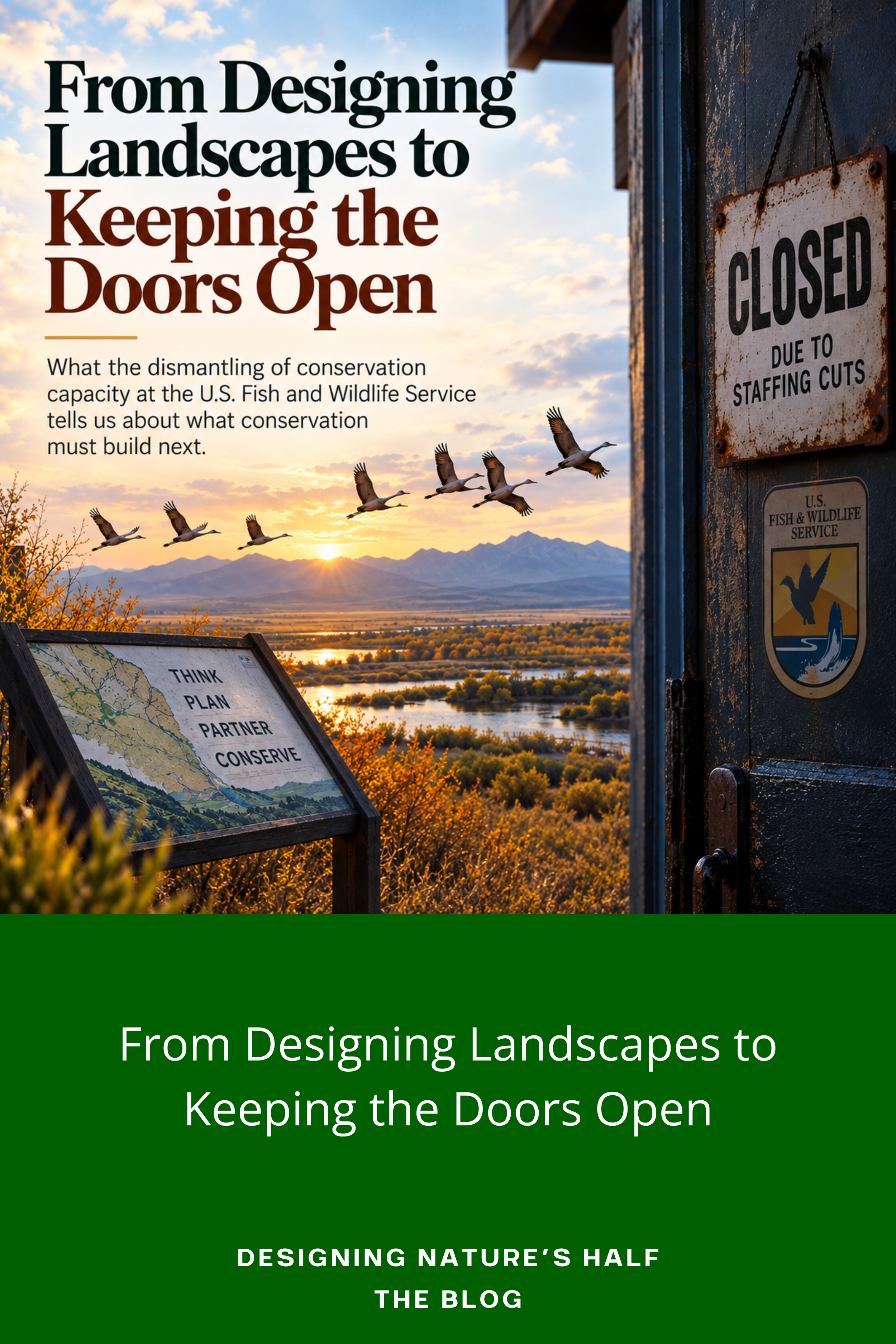
From Designing Landscapes to Keeping the Doors Open
Fifteen years ago, the National Wildlife Refuge System was helping to pioneer a landscape-scale approach to conservation in a changing climate. Today, the USFWS is rapidly losing people, expertise, and essential institutional capacity at an extraordinary rate. After 25 years in federal conservation, I believe the lesson is clear: we must protect what we've built—and begin building conservation institutions that are durable, well-resourced, and adaptable enough for the challenges that lie ahead.
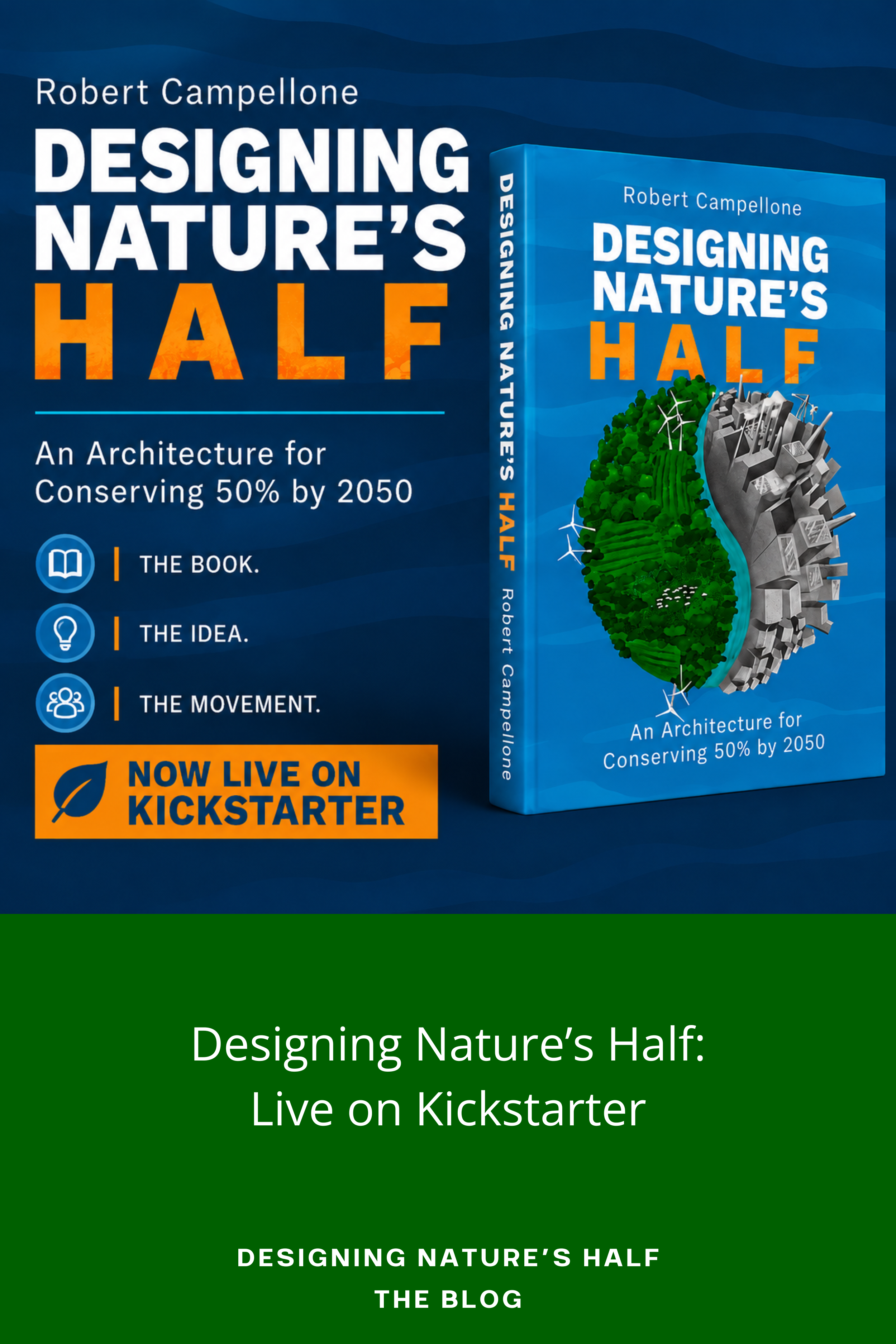
Nature Works Across Landscapes. Conservation Should Too.
Pollution, climate change, and biodiversity loss are reshaping landscapes while conservation remains divided across many of the boundaries nature crosses. Designing Nature’s Half asks how we can organize conservation differently—and its 30-day Kickstarter campaign is now live.
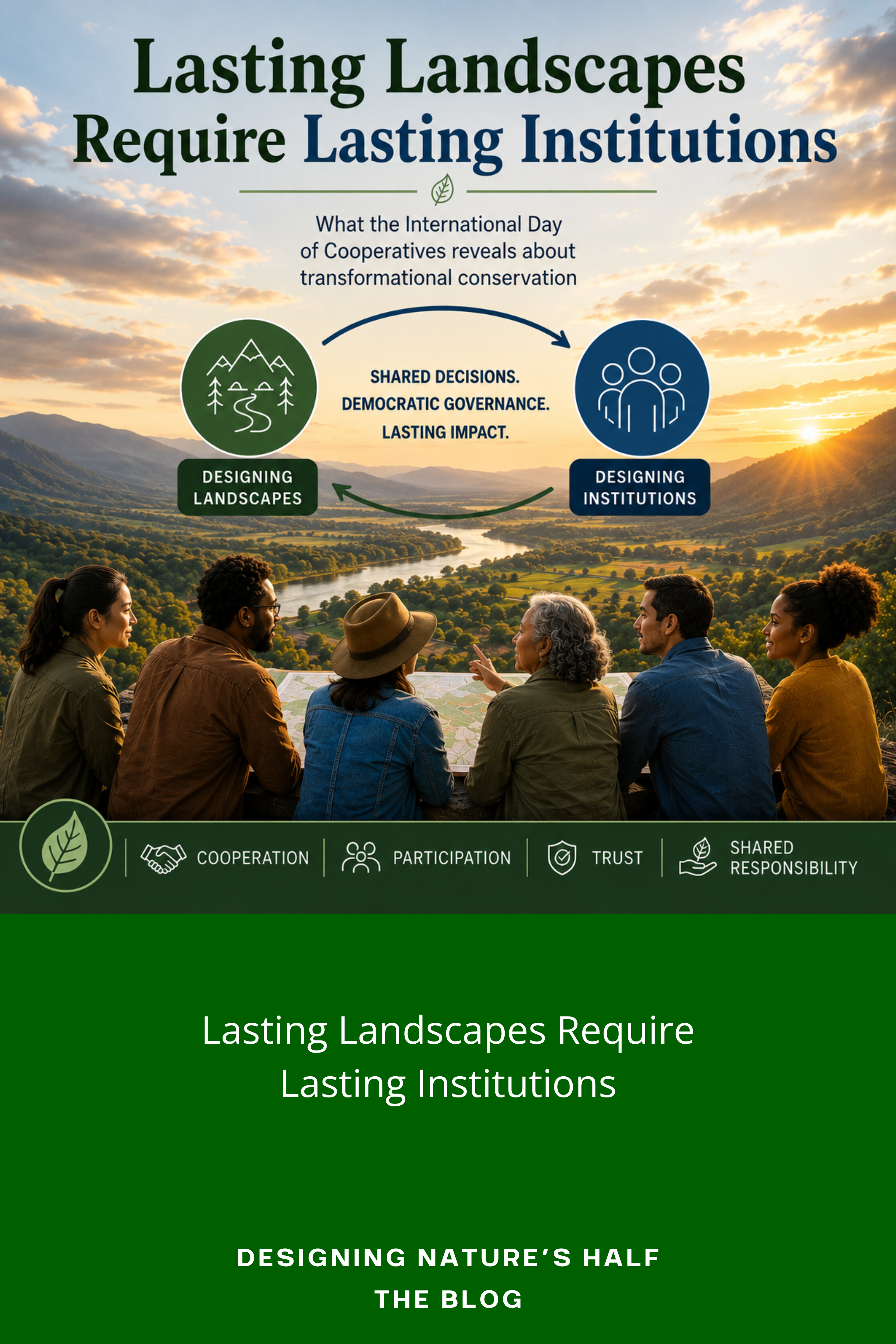
Lasting Landscapes Require Lasting Institutions
What do peaceful societies and sustainable landscapes have in common? More than we might think. Inspired by the United Nations' International Day of Cooperatives, this essay explores why transformational conservation requires not only better landscape design, but also democratic institutions intentionally designed to sustain shared stewardship over time.
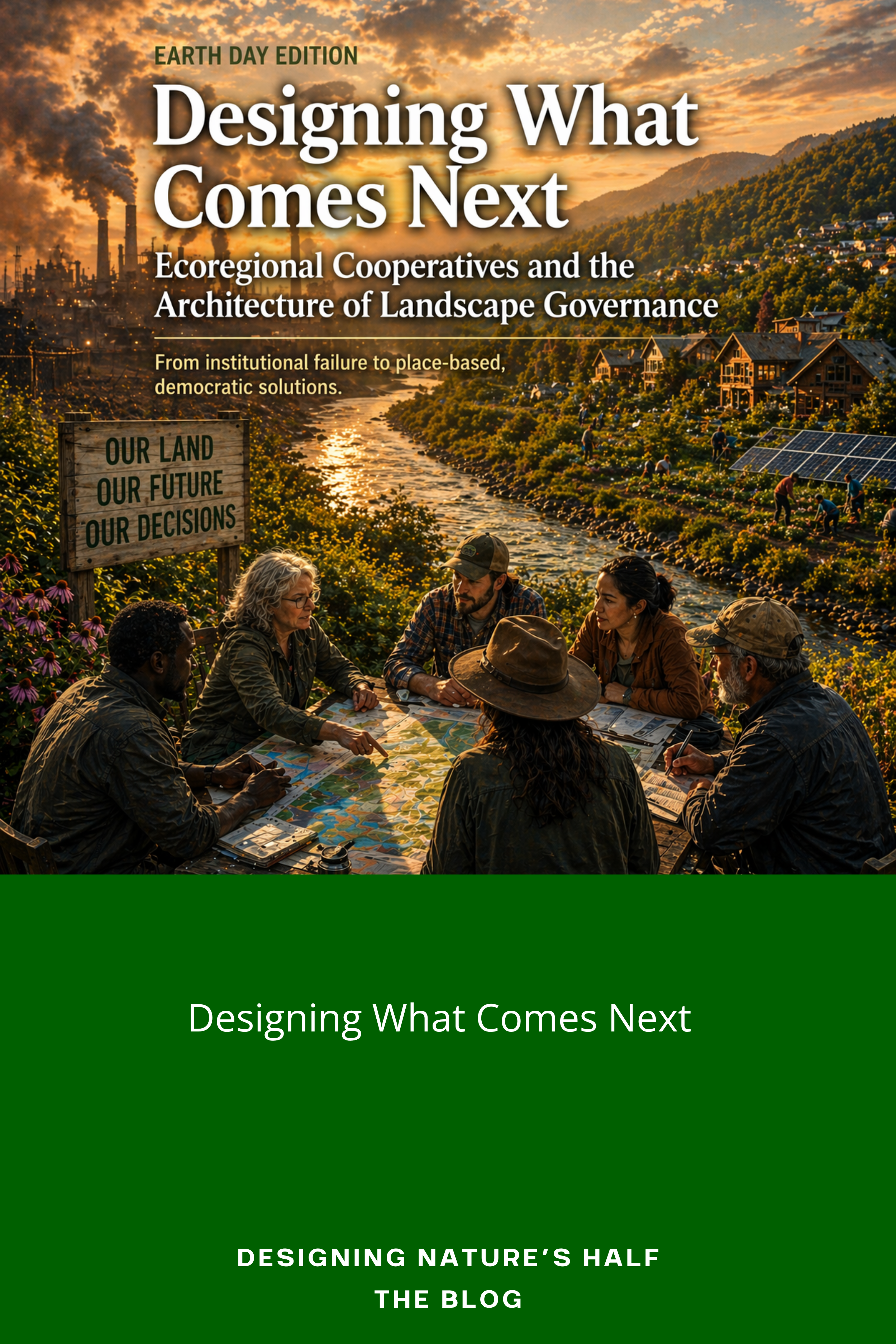
Earth Day Edition: Designing What Comes Next - Ecoregional Cooperatives and the Architecture of Landscape Governance
As environmental governance falters, the question is no longer whether coordination is needed, but how it can be rebuilt. This Earth Day essay explores Ecoregional Cooperatives, landscape conservation design, and ecosocialism as democratic, place-based approaches to organizing decisions at the scale ecological conditions demand.
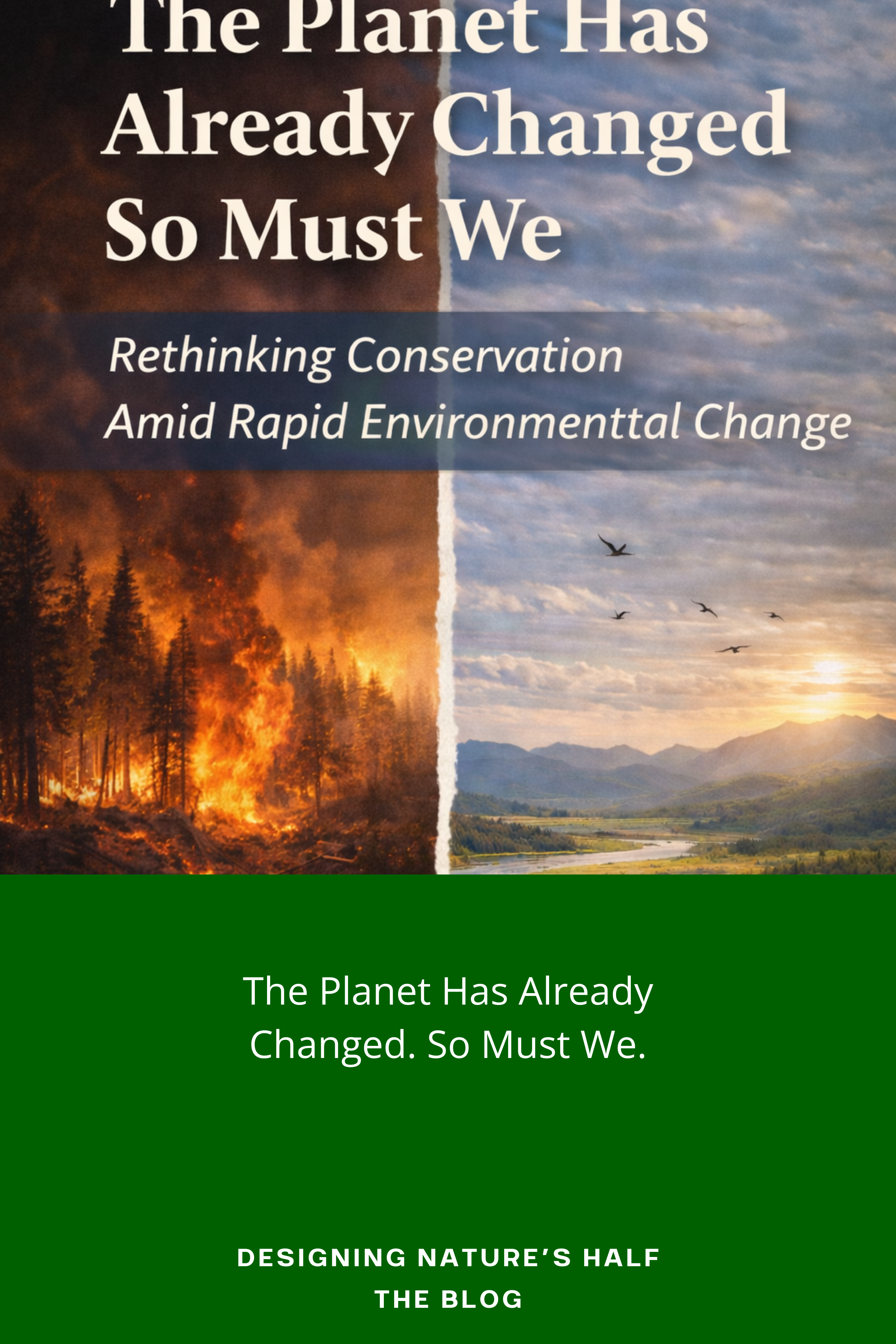
The Planet Has Already Changed. So Must We.
The United States has just experienced the second-warmest winter on record. Viewed over a longer time horizon, however, this moment is part of a much larger story. Within a single lifetime, winter temperatures across the country have risen dramatically, illustrating the accelerating pace of environmental change. As the planet’s ecological systems shift, the institutions historically responsible for conservation are also coming under strain. These converging trends raise a critical question: what kinds of regional institutions and planning approaches will be needed to design and steward sustainable landscapes in the decades ahead?
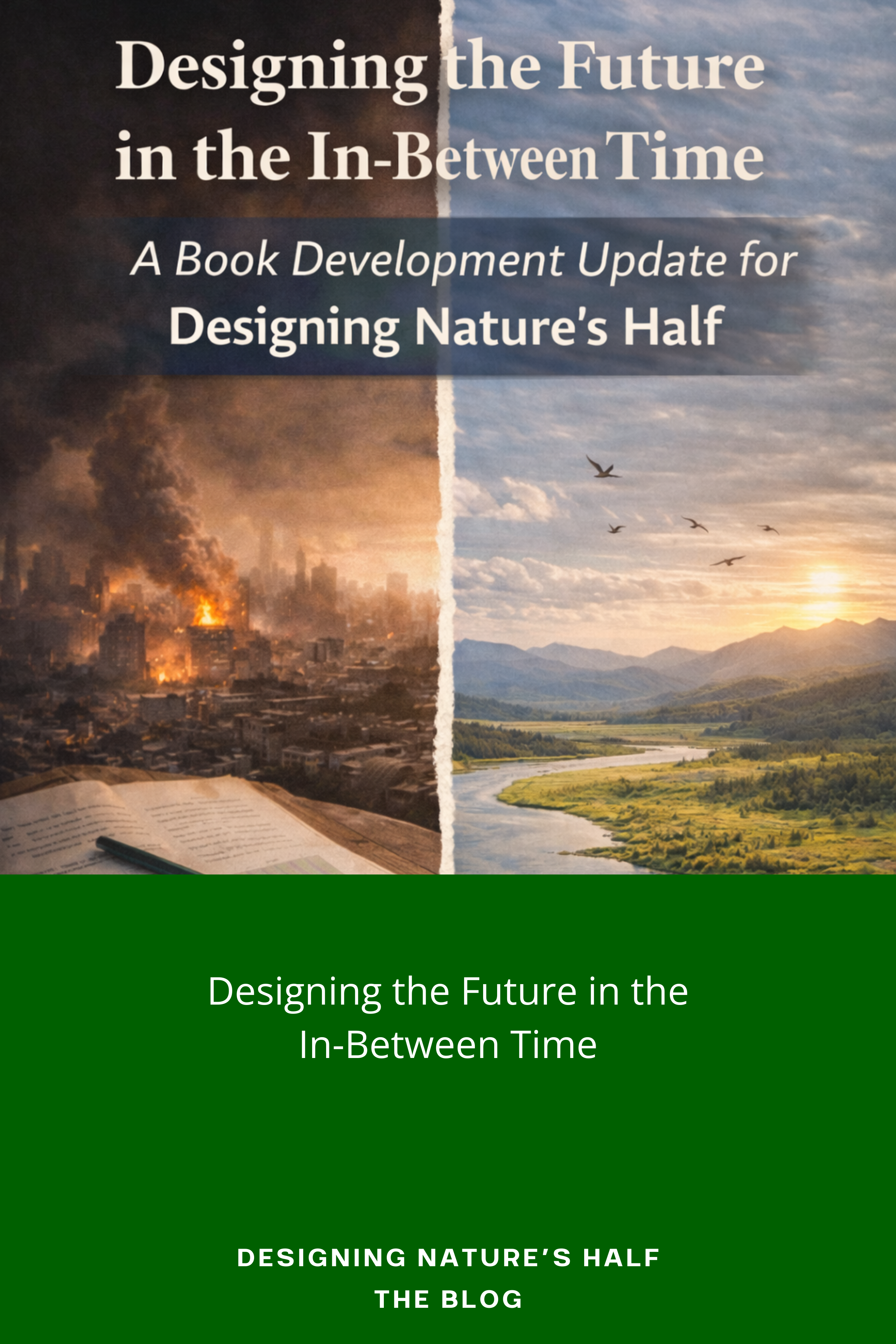
Designing the Future in the In-Between Time
In times of upheaval, long-term thinking becomes even more important. This update on the development of Designing Nature’s Half explains what’s behind the book, where the manuscript stands today, and how its focus is shifting from landscape conservation design toward governance and implementation.

Designing the Energy Transition at Landscape Scale
Renewables have overtaken coal globally. China is reorganizing its energy system at historic speed. Rare earth extraction is leaving visible scars across landscapes. The energy transition is accelerating, but who decides where its burdens fall? Land is being converted. Minerals are being extracted. Water is being withdrawn. Infrastructure is expanding. The question is no longer whether the transition will proceed, but whether the landscapes that sustain it are being deliberately designed — or altered one permit at a time.
Landscape conservation design offers a framework. Ecoregional Cooperatives offer a mechanism. The durability of the transition will depend on whether regions use them.
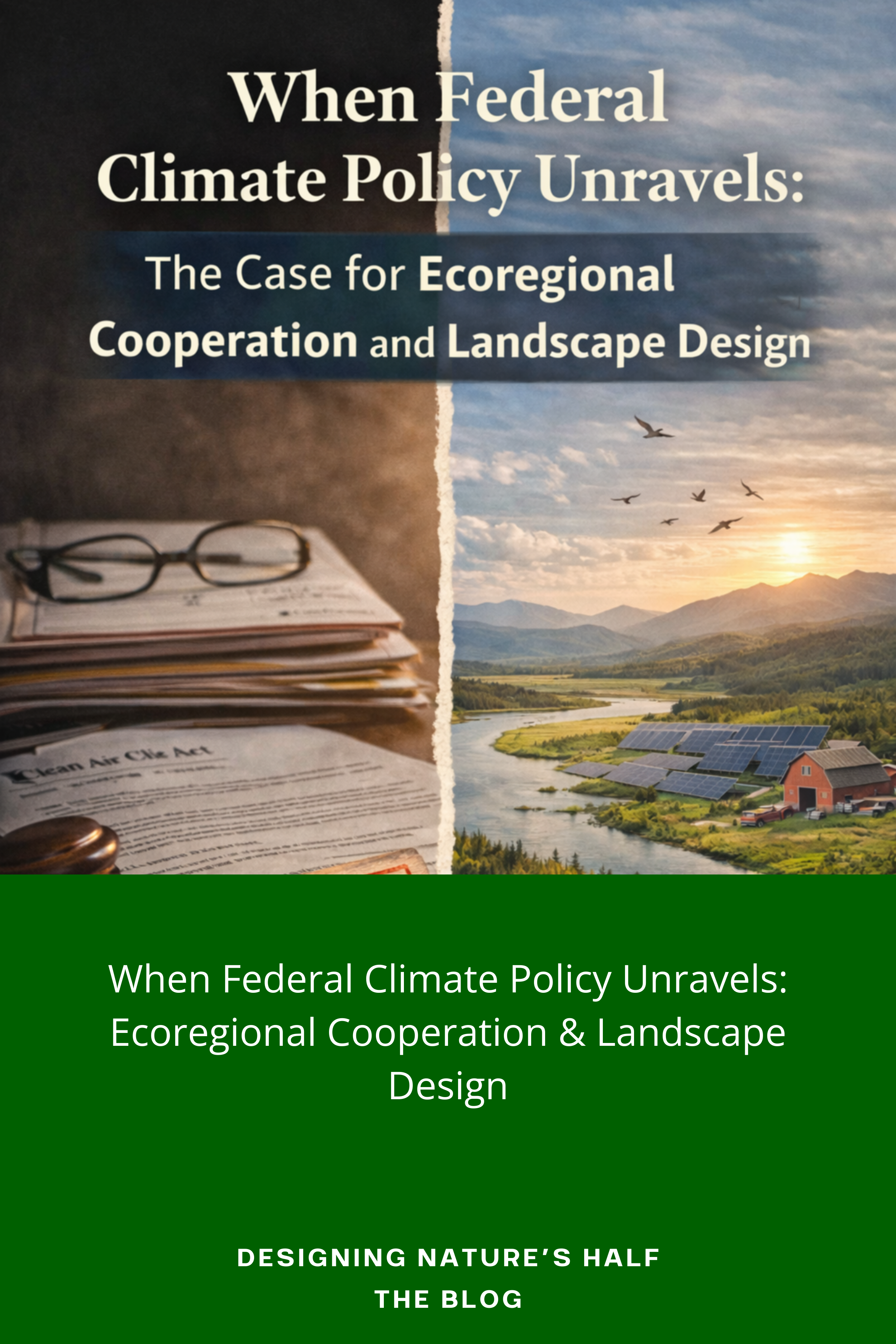
When Federal Climate Policy Unravels: Ecoregional Cooperation and Landscape Design
When centralized climate policy unravels, landscape-scale institutions matter more than ever. This article makes the case for ecoregional cooperation and design approaches that embed durable decision authority across regions.